
Scoliosis: When Should You Get It Checked?
Scoliosis is a curve in the spine that’s most common in kids and teens during growth spurts — and it usually doesn’t hurt, which is exactly why it’s easy to miss.
Key messages
- Scoliosis is a curve in the spine, but it’s more than just a side-to-side bend.
- It doesn’t always cause pain, and how much it hurts doesn’t necessarily match how curved the spine is — so it’s easy to miss.
- It shows up most often during the early teenage growth spurt.
- A simple bend-forward check can help show if it needs a closer look.
- A physiotherapist can assess your child and refer on for an X-ray or specialist opinion if needed.
What is scoliosis?
Scoliosis means the spine curves sideways instead of running straight down the back. Doctors measure how much it curves on an X-ray, but that number alone doesn’t tell the whole story.
That’s because scoliosis doesn’t just bend the spine sideways. It can also twist the spine and change the shape of the back, which is why one shoulder blade or a section of the ribs can stick out more than the other side. Because of this twist, the curve on an X-ray doesn’t always match how noticeable it looks, or how a person feels.
Most of the time, there’s no single clear cause. It tends to run in families to some degree, and it shows up more often in girls than boys. It’s most likely to appear or get worse during the early teenage years, when the spine is growing quickly — which is also the best window to pick it up early, while there’s still time to act before growth finishes.
Signs to watch for
Scoliosis doesn’t always cause pain, especially early on, so it’s often first noticed by a parent, teacher, or during a routine check — not because the child complains of a sore back. Look out for:
- One shoulder sitting higher than the other
- One shoulder blade sticking out more than the other
- Uneven waist, or clothes hanging unevenly
- Leaning slightly to one side
- When bending forward to touch their toes, one side of the back (or the ribs) sits higher than the other
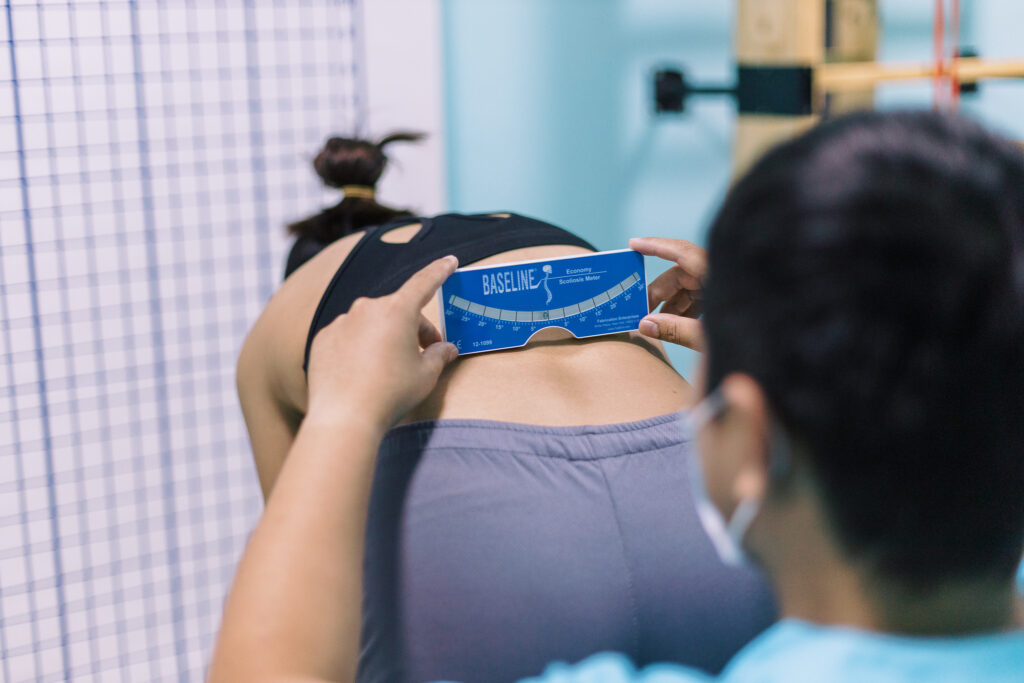
A simple way to check the last one: ask your child to bend forward with their arms hanging down, as if touching their toes, and look along their back from behind. An easy, even curve down both sides is reassuring. A rib or muscle “hump” on one side is worth getting checked.
When to get it checked
Consider booking an assessment if you notice:
- Any of the signs above
- A change in posture that’s new or getting more noticeable
- A family history of scoliosis, alongside any of the signs above
A physiotherapist can check your child’s back with a quick, painless bend-forward test and a few simple measurements. If it looks like it needs a closer look, we can refer for an X-ray or on to a specialist. Picking it up early — while your child is still growing — gives the most options for managing it well.
Most curves are mild and just need keeping an eye on. Getting it checked isn’t about jumping to the worst-case outcome; it’s about understanding what’s there so you and your child know where things stand.